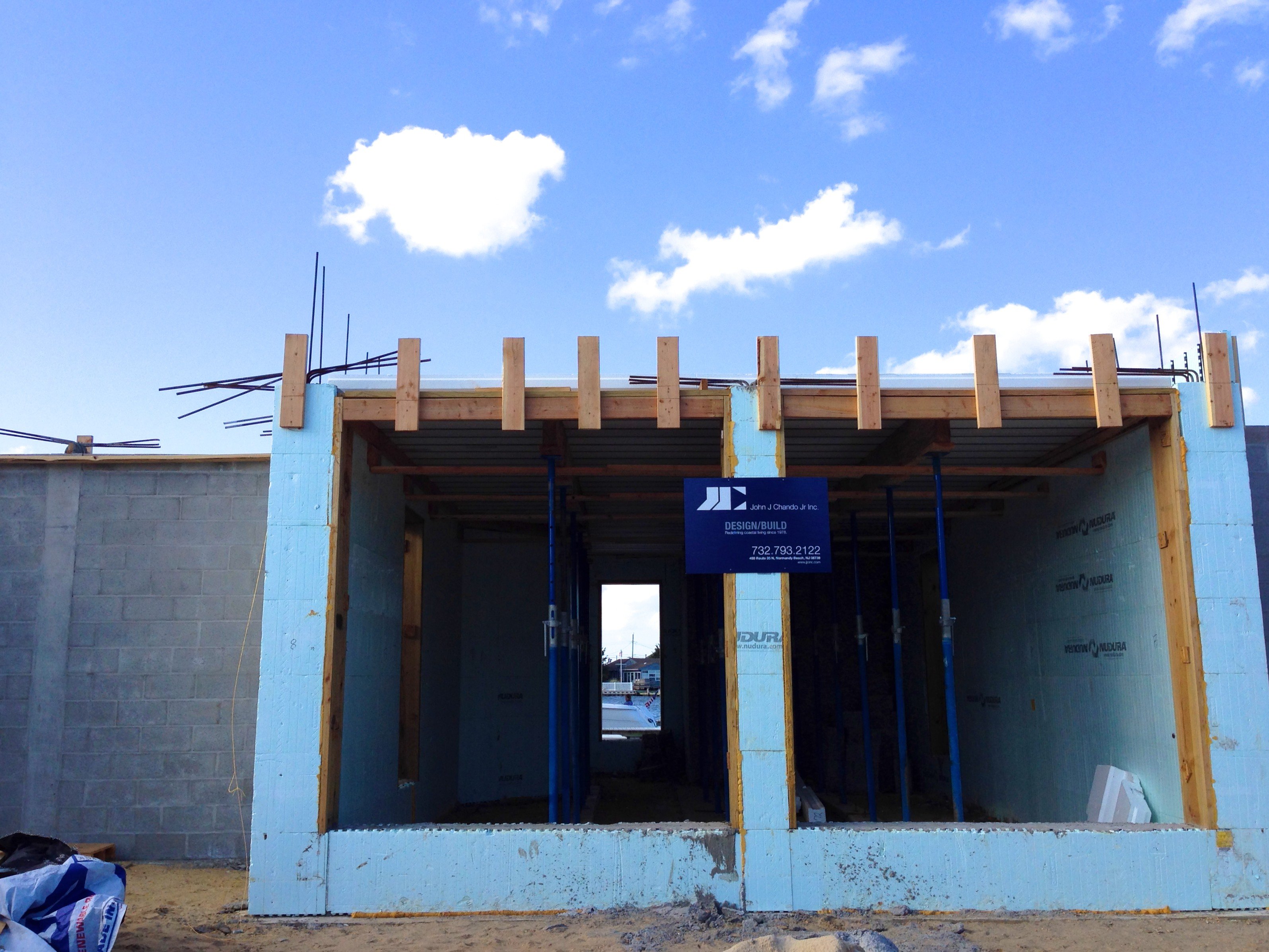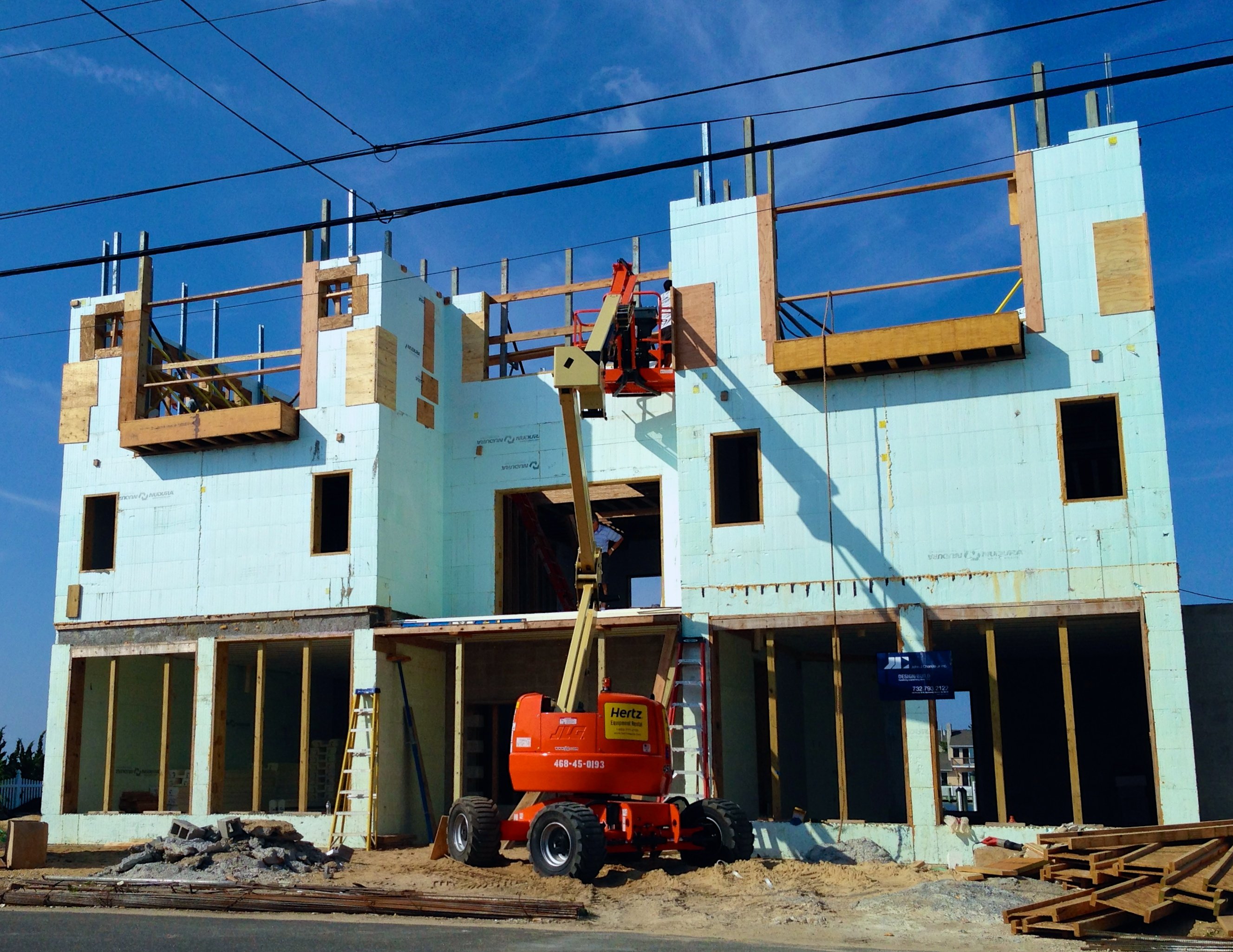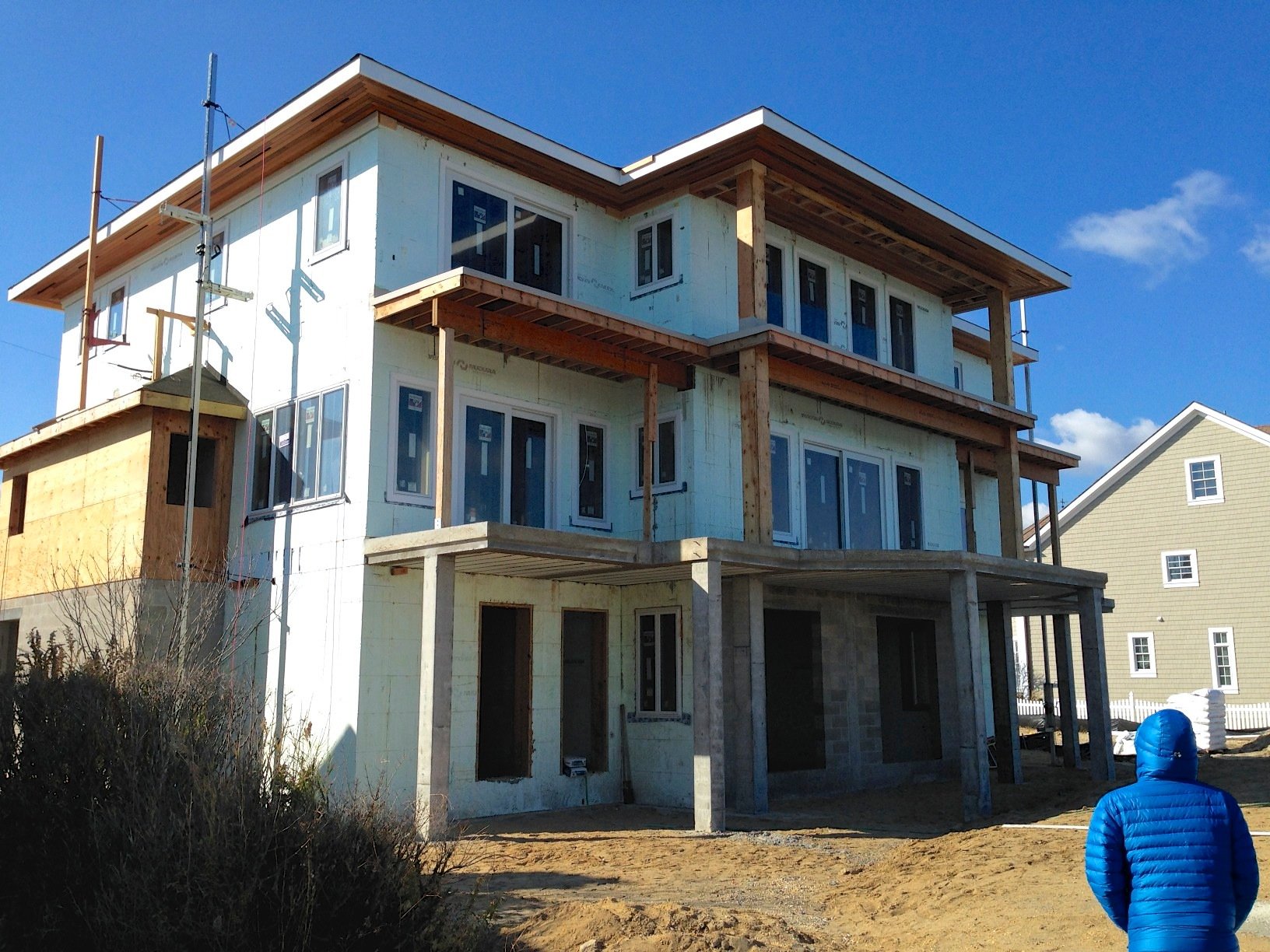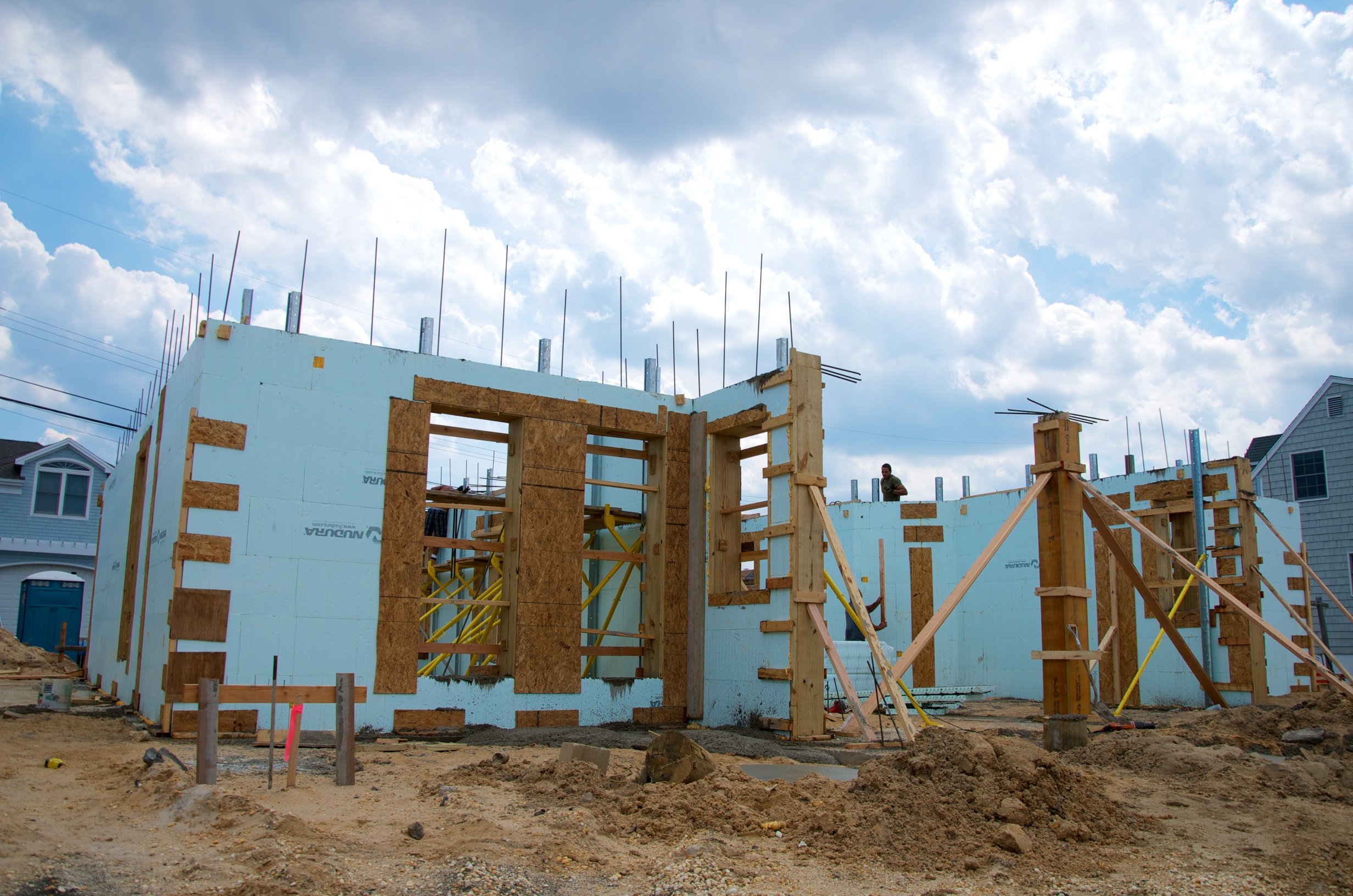
Six feet of water inside after Sandy. We rebuilt this Normandy Beach home in the V-zone — fourteen feet up, on poured concrete and ICF, with a four-car garage in the breakaway space below.
We’ve just broken ground on a new home in Normandy Beach, NJ. The previous structure on this lot sat at a very low elevation, and Hurricane Sandy put six feet of water inside it. Rebuilding here — the right way — meant going back to the drawing board.
The site falls inside the FEMA V-zone under the new flood maps, which means the first floor must sit at elevation 14 feet, with breakaway walls underneath the structure. The design uses every inch of that mandated under-structure space — a generous four-car garage and storage area replaces what would otherwise be unusable air.
Why we’re not doing the Carolina-style stilt look
A common V-zone solution is the so-called Carolina look: helical or wood pilings driven deep, with the house suspended ten to fourteen feet up on those slender legs. It works structurally — sometimes — but it carries real concerns. The visual is heavy and awkward on a coastal lot, and the long, exposed pilings introduce their own structural risk under sustained wind loading.
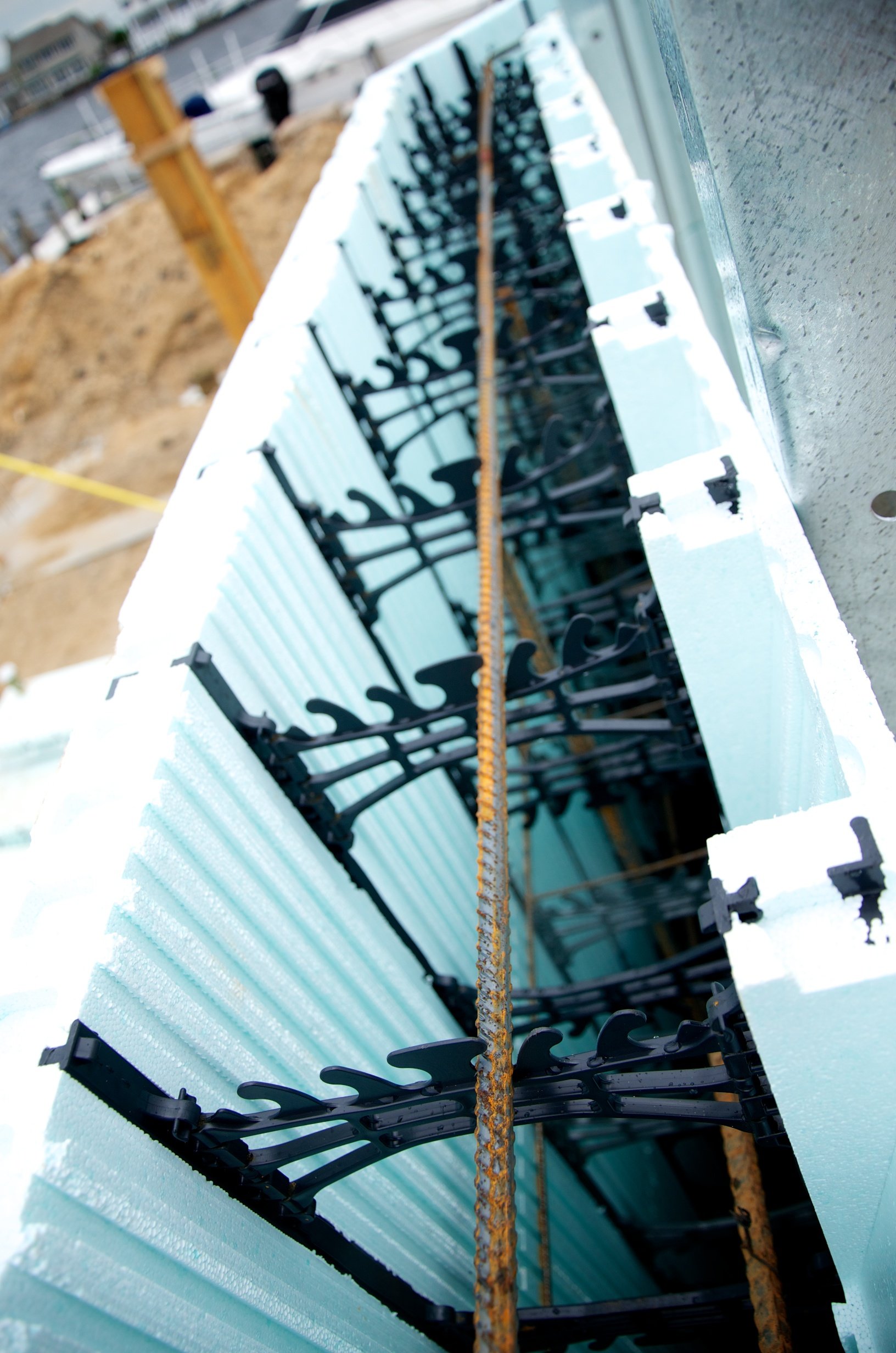
Our approach on this build is different. We’re using regular wood pilings driven into the ground, but we’re not relying on them to carry the elevation. Instead, the first floor is supported by poured concrete with ICF forms and concrete piers all the way up to the +14 elevation. The result is a far more substantial base, both visually and structurally — and it gives us the wall thicknesses we need to insulate the underside of the living space properly.
Why ICF, not wood
Building the elevated structure with insulated concrete forms (ICF) gives us a wall assembly that’s stronger, more energy-efficient, and more comfortable than its wood-framed counterpart. The continuous concrete shell delivers an effective insulation value up to R-50, dramatically reducing both heating and cooling load. There’s no thermal bridging through studs, no wood for moisture or pests to find, and the wall mass dampens sound — particularly the constant wind on a coastal site.
We call the result a hurricane-resistant home. It’s not a marketing slogan; it reflects what reinforced concrete actually does under storm loading.
This project is a full custom JJC Inc. design + build engagement — engineering, architecture, and construction managed by one team rather than the conventional architect-plus-general-contractor handoff. We’ve been doing it that way since 1978, on the same stretch of coastline. If you’re rebuilding a damaged home or starting fresh on a Jersey Shore lot, we’d be happy to talk through what’s possible.
Related project
Toms River Oceanfront Concrete
Toms River, NJ
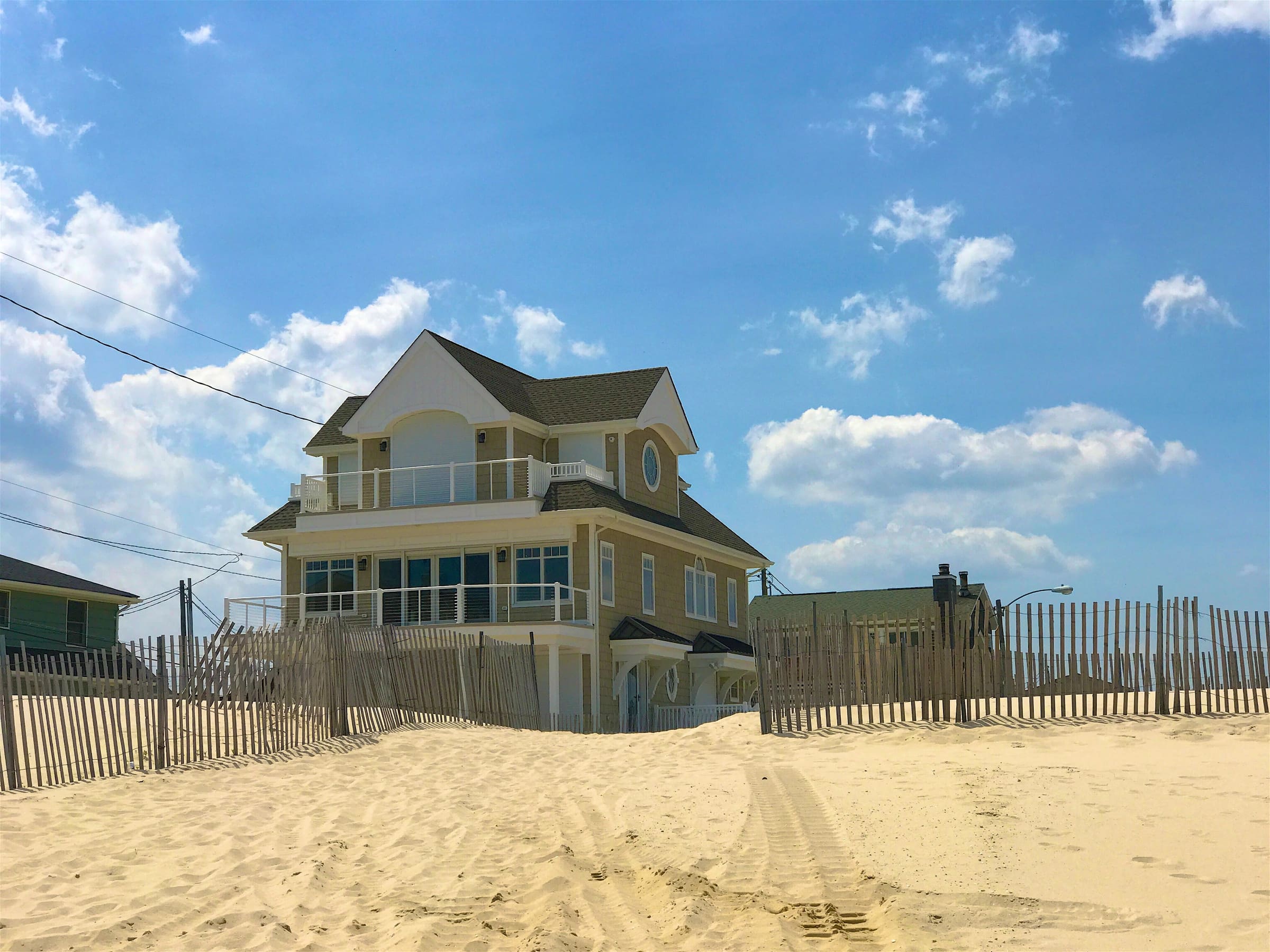
Oceanfront ICF concrete custom home in Toms River, NJ. Insulated concrete form construction engineered for direct ocean exposure and storm resistance on the Jersey Shore.
See the project →