John J. Chando Jr. Inc.

Build with ICF

Insulated Concrete Forms.

Strong. Energy efficient. Hurricane resistant. The building method we recommend for every oceanfront and waterfront home we design, and the one we've been pouring on the Jersey Shore for more than a decade.

  • 250+mph

    Wind resistance, designed to spec

  • R-50

    Effective wall R-value with thermal mass

  • 30–50%

    Less energy used vs. stick-frame construction

  • 4 hr

    Fire-resistance rating of the concrete core

Why ICF for the shore

Building methods evolve. Yours should too.

Hurricanes, nor'easters, and salt-air corrosion aren't theoretical concerns on the Jersey Shore. They're a fact of life. The way most homes here were built, even the new ones, is wood-frame technology that hasn't changed materially in a century.

ICF is the upgrade. A steel-reinforced concrete wall, insulated continuously on both faces, performs better than stick-frame on every dimension that matters: structural strength, energy use, sound, fire, longevity. The premium pays back over the life of the home, and the home stands up to weather that flattens its neighbors.

What you get

One wall assembly. Four real advantages.

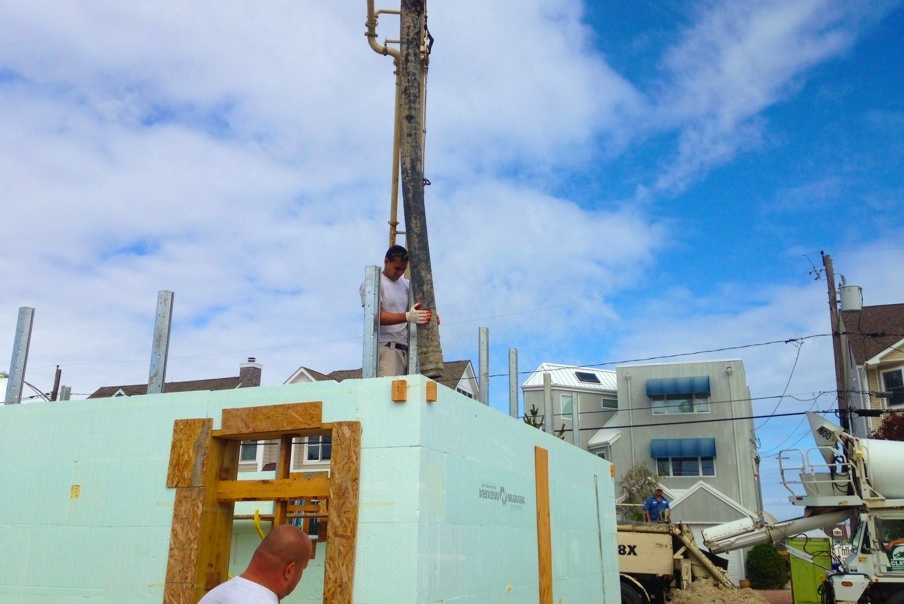
ICF concrete pour during construction of a Jersey Shore home

Hurricane resistance

Built for the worst the Atlantic can throw at it.

ICF walls are a continuous, steel-reinforced concrete monolith, designed to withstand winds in excess of 250 mph. Strong buildings aren't optional at the shore. They're the difference between a home that's standing the morning after, and one that isn't.
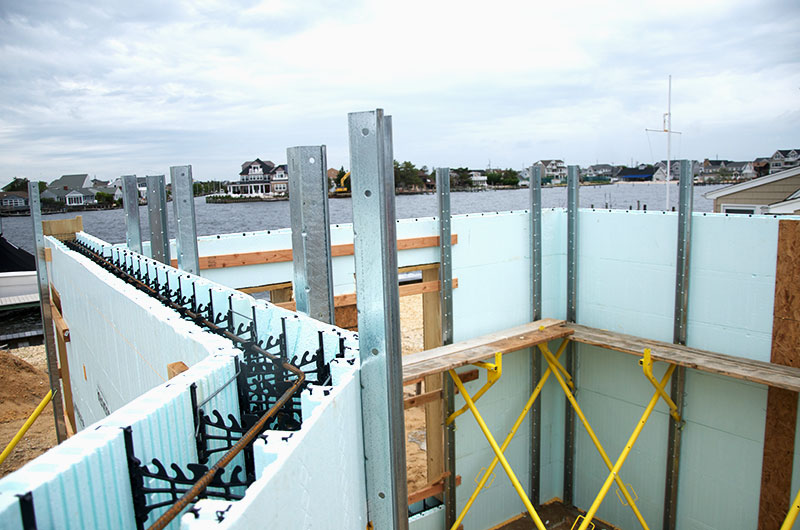
Cross-section of an ICF wall showing foam and concrete layers

Energy efficiency

R-50 walls vs. the R-13 you’d get from wood.

The concrete core provides massive thermal inertia. Combined with continuous foam insulation on both faces, an ICF wall delivers an effective R-value up to R-50, against R-13 for a typical wood-frame wall. Most ICF homes use 30–50% less energy heating and cooling than conventional construction.

Completed ICF custom home on the New Jersey Shore

How it works

Foam blocks, rebar, and concrete fused into one wall.

Hollow foam blocks are stacked like Lego, reinforced with steel, then filled with concrete. The result is a continuous concrete wall sandwiched between two layers of rigid foam insulation. No thermal bridging, no air infiltration, and exceptionally quiet inside. The same wall handles structure, insulation, and air-sealing in a single assembly.

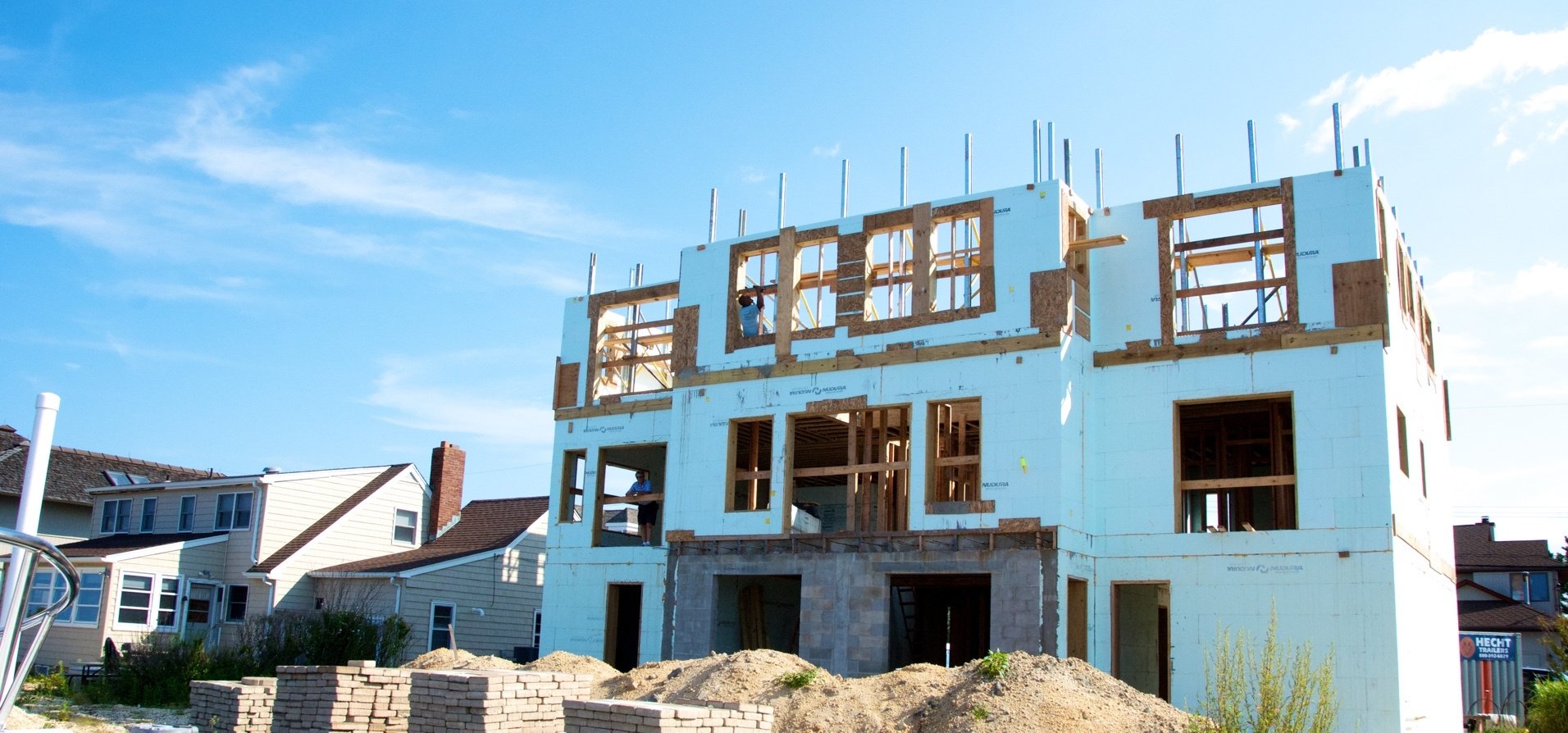
Steel-reinforced ICF wall during construction

Built to last

When mother nature brings her worst, ICF stands strong.

Concrete doesn't rot, warp, or feed termites. It doesn't lose its structural rating after a hurricane the way a wood-frame wall can. The home you build today is the home your grandchildren will inherit, and it'll still be more efficient than most new construction when they do.

ICF vs. wood frame

The same square footage, a fundamentally different home.

Traditional wood frame

  • R-13 wall insulation
  • Rated to local code wind loads
  • Thermal bridging through every stud
  • Vulnerable to rot, mold, termites
  • Significant air infiltration

ICF construction

  • + Up to R-50 effective wall value
  • + Engineered for 250+ mph winds
  • + Continuous insulation, no bridging
  • + Concrete core, no rot, no termites
  • + Air-sealed envelope, quieter inside
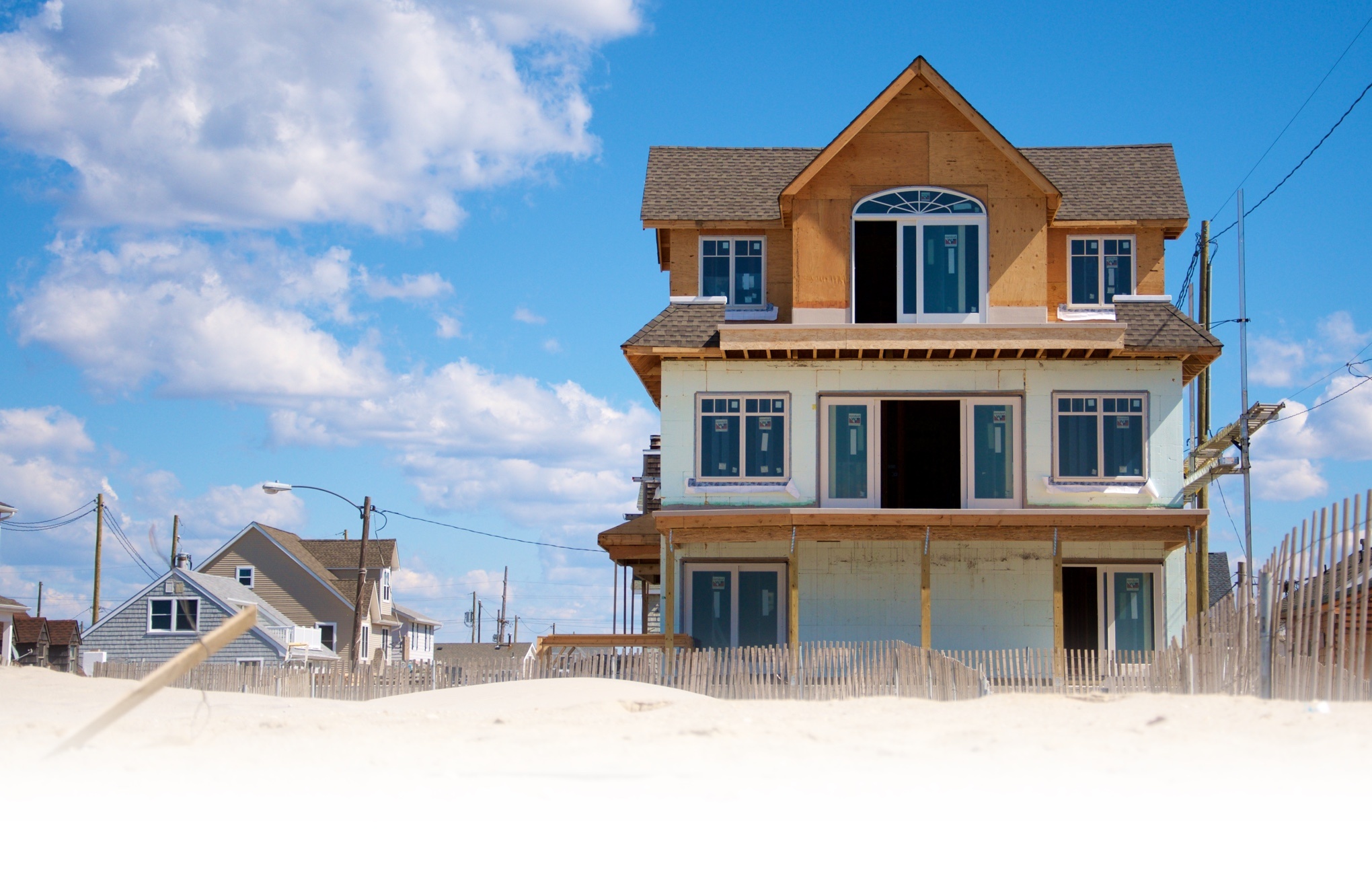
Completed ICF home on the Jersey Shore

Our ICF portfolio

From Mantoloking to Toms River.

We've been pouring ICF on the Jersey Shore for more than a decade. See the homes we've built and the projects in progress.

View projects

Considering ICF for your next home?

We'll walk you through the cost differential, the energy payback, and what it actually looks like to design and pour an ICF home on a coastal lot.