Walls designed to fail before the foundation does. A reinforced concrete first floor with R-28 insulation and radiant heat baked in. The unglamorous engineering that makes a coastal home survive a storm.
We’re back in Normandy Beach with the next chapter of this build, picking up where Part 1 left off. This stretch of construction uses techniques that don’t get a lot of attention from outside the industry — but they’re what separate a structure that survives a storm from one that doesn’t.
Breakaway walls: walls designed to fail
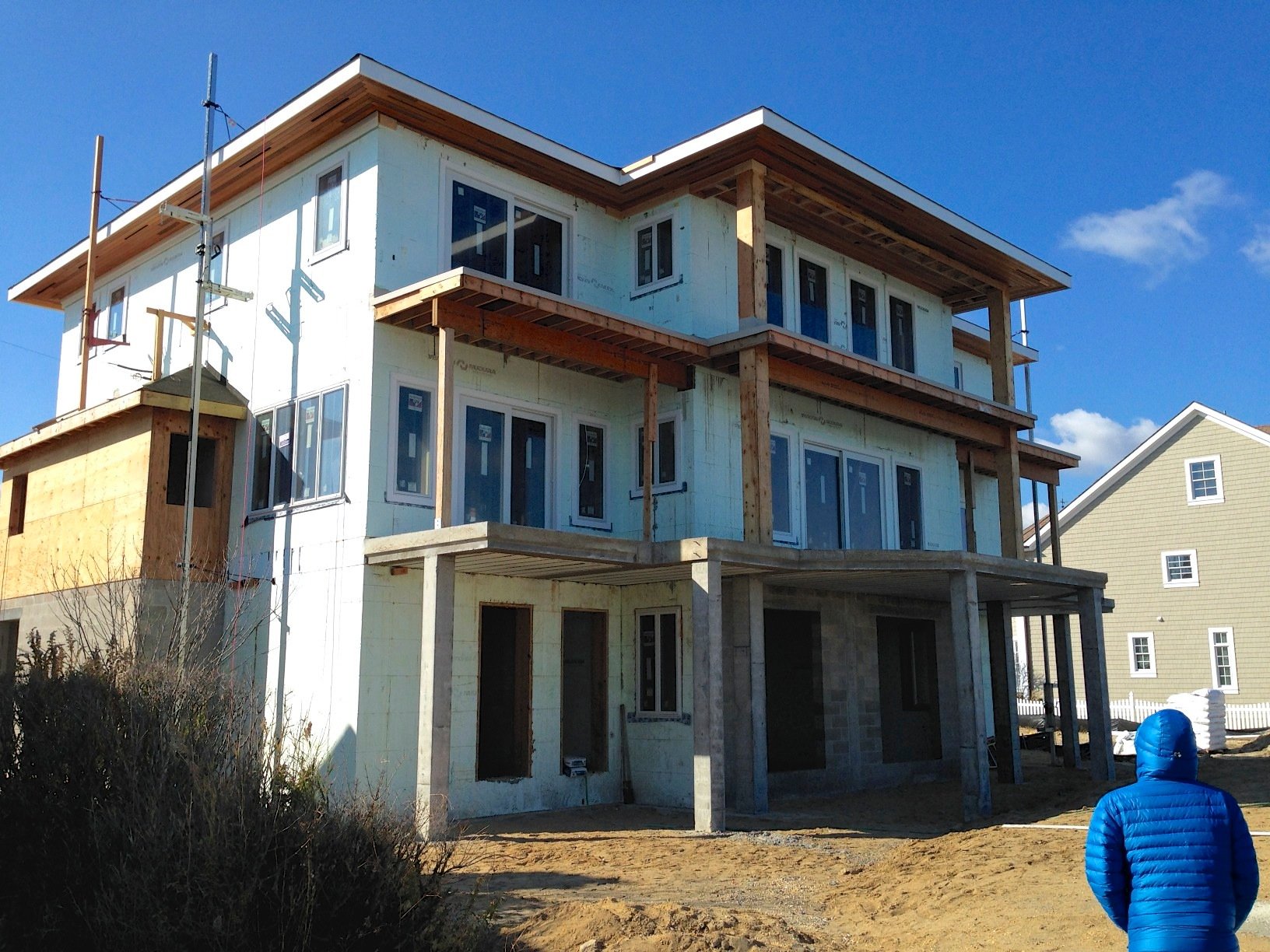
In FEMA V-zone construction — the highest-risk coastal flood zone — any walls underneath the elevated living space that sit perpendicular to the direction of wave action are required to be breakaway walls. The name is exact: these walls are engineered to fail under specific wave loads, before the load can transfer up to the foundation or the structure above.
The logic is counterintuitive but sound. If a wave hits a rigid wall that holds, the wall transfers that energy into the foundation, and the foundation has to carry it. If the wall instead breaks away cleanly, the water flows through the under-structure space without ever loading the foundation. The structure above is undamaged. You replace the walls; you keep the house.
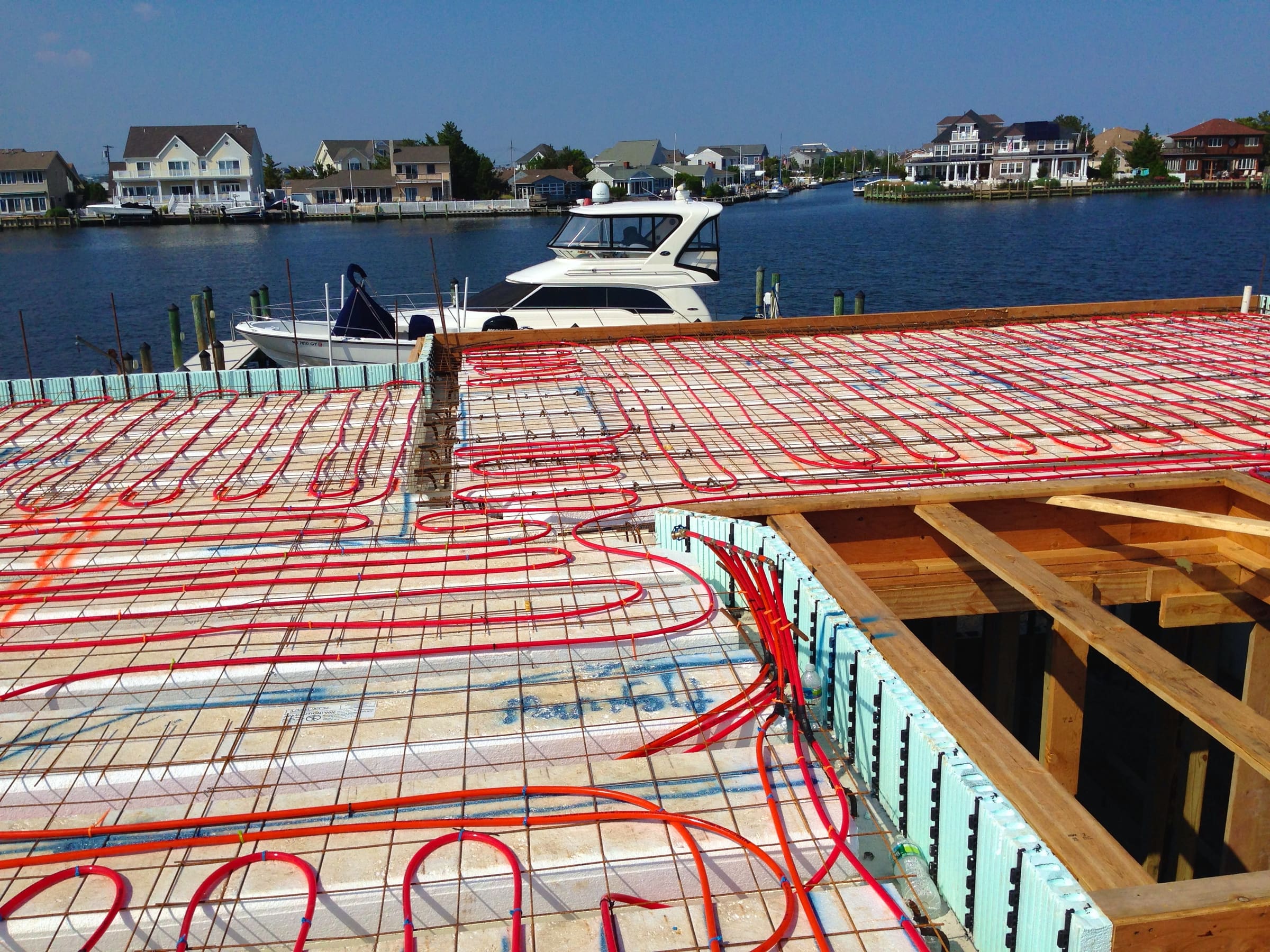
ICF shear walls: walls designed not to fail
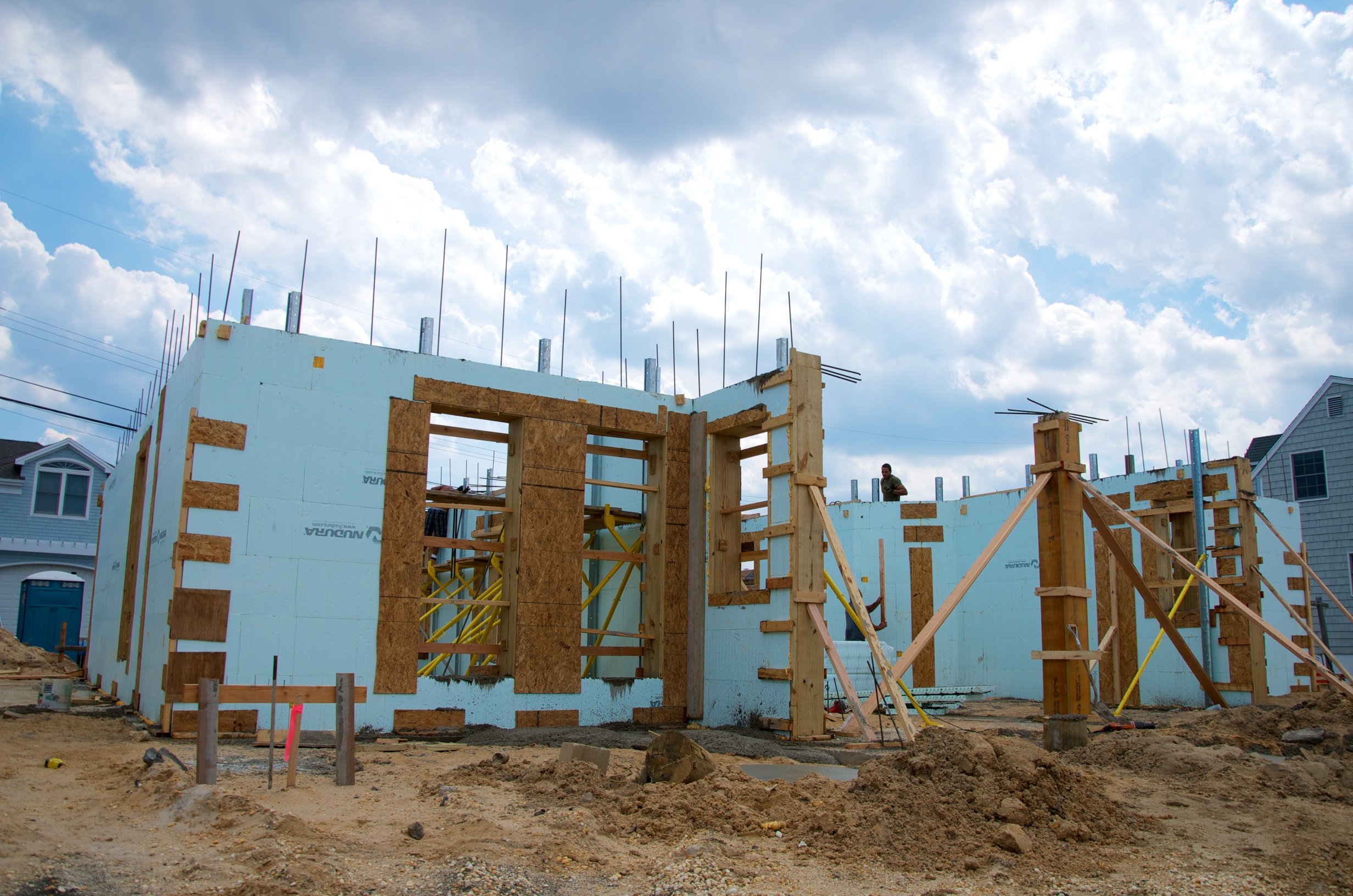
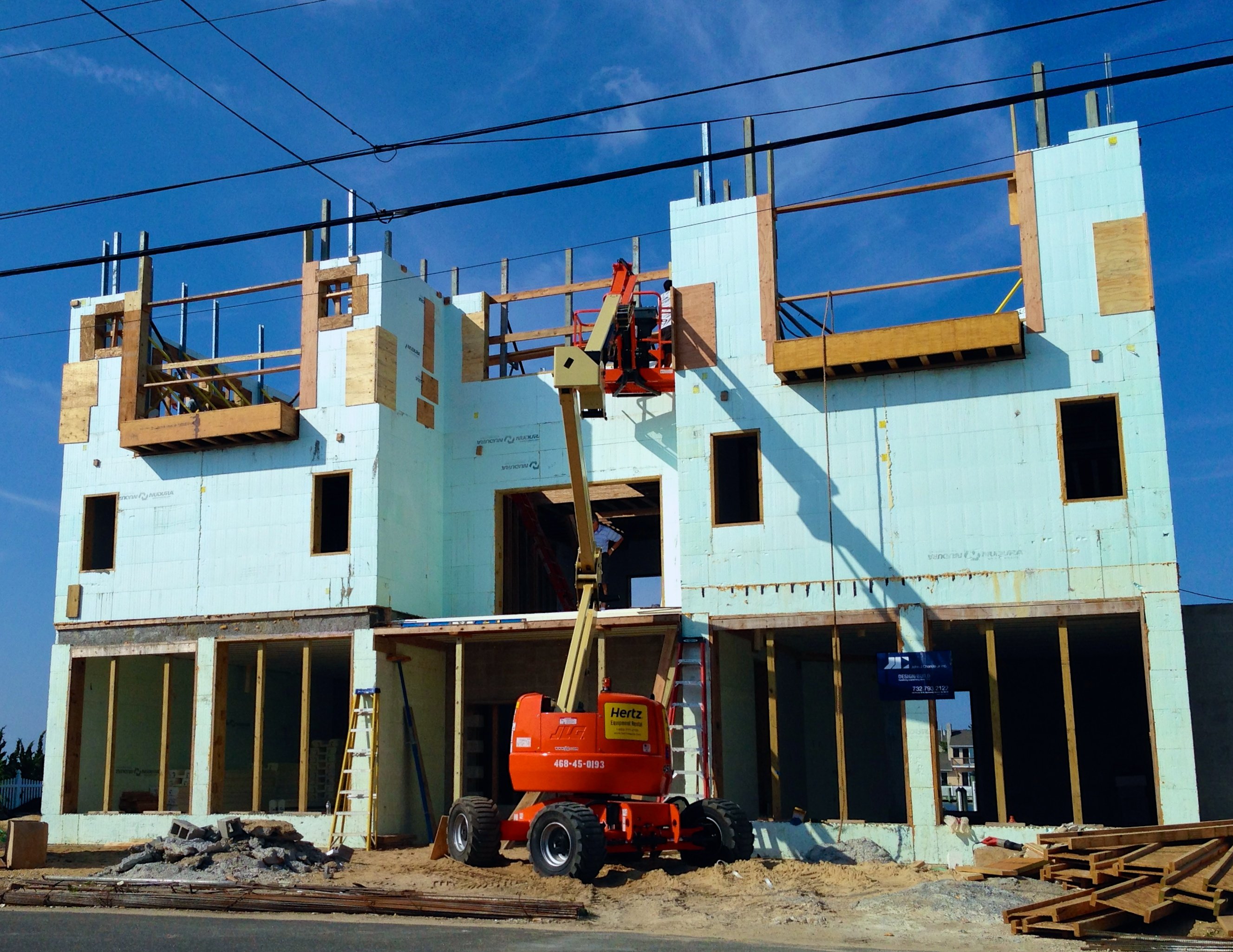
The walls running parallel to wave action are called shear walls. These do the opposite job — they hold the structure rigid against lateral wind loading. We build them with insulated concrete forms (ICF) filled with reinforced concrete. The combination of mass and reinforcement produces extraordinary lateral strength.
ICFs themselves are molded expanded polystyrene (MEPS) foam blocks that form the casting for cast-in-place concrete walls. Unlike conventional concrete formwork, the foam stays in place after the pour cures — it becomes the wall’s insulation, an attachment surface for finishes, and a chase for plumbing and electrical runs.
The Lite-Deck floor system
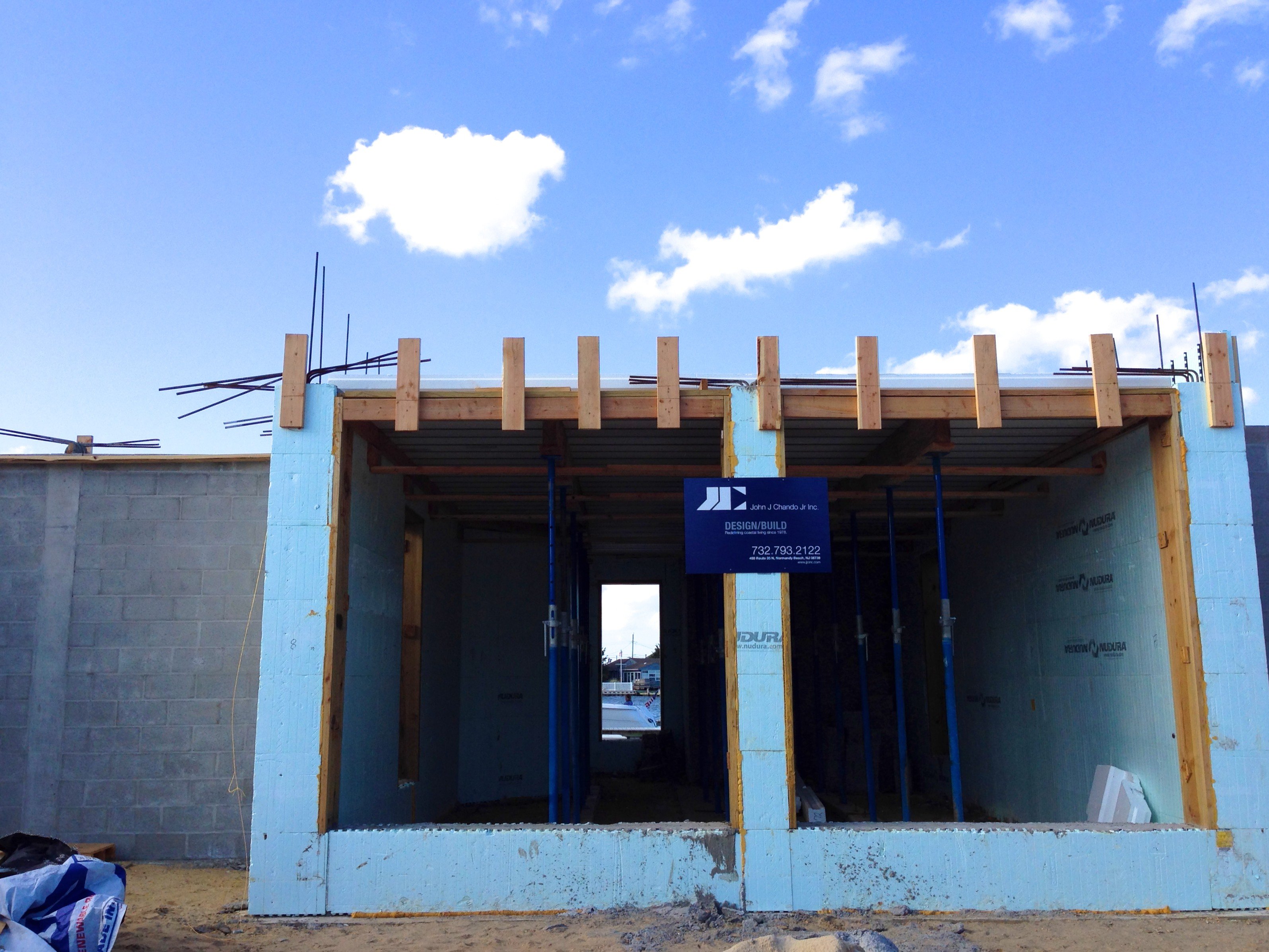
The first floor of this home is also concrete — specifically, an ICF Lite-Deck assembly. Lite-Deck is a stay-in-place form for reinforced concrete floors and decks, and it’s the solid-concrete alternative to conventional wood-framed floor systems in residential and commercial construction.
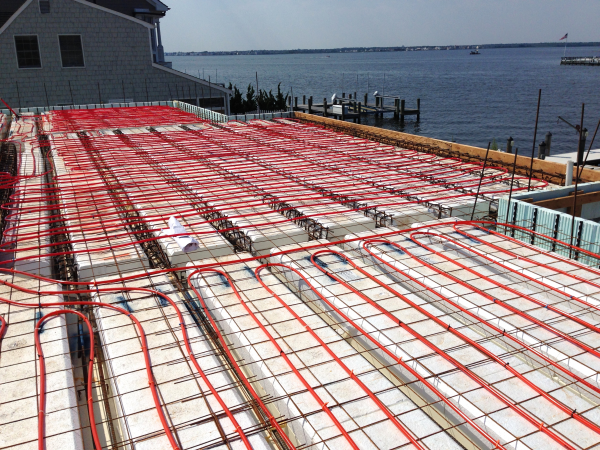
Once the deck is poured, you’ve tied the lower walls together into a single rigid platform. The structural benefits are obvious. The non-obvious ones are quieter:
- Fire rating over four hours — the kind of margin you can’t get from any wood-framed assembly
- R-28 insulation value in the floor itself
- Sound dampening that you don’t even notice until you’ve spent a night in the house
- Radiant heat tubing can be installed in the forms before the pour, giving the entire floor a low-cost, zone-able warm-floor heating system
FEMA explicitly recognizes Lite-Deck, in combination with reinforced concrete or masonry walls, as an effective envelope for safe-room construction against deadly winds.
Part 3 takes the ICF approach all the way up — the upper-floor walls, not just the foundation and first floor, in concrete.