Some homeowners take it further: every floor, every wall, every level — concrete. Here's what an entire ICF house looks like, and what it does for your insurance, your heating bill, and your peace of mind.
It’s been almost two years since Superstorm Sandy rewrote the Jersey Shore. As more families finish their rebuilds, you’re seeing more homes coming out of the ground on concrete foundations. Some homeowners take it a step further and build the entire house out of concrete — walls, floors, every level.
If you want a hurricane-proof home in the truest sense, this is what it looks like. Welcome to Part 3 of our series. (Part 1 covered the V-zone foundation; Part 2 covered breakaway walls and the Lite-Deck floor system.)
A whole house in ICF
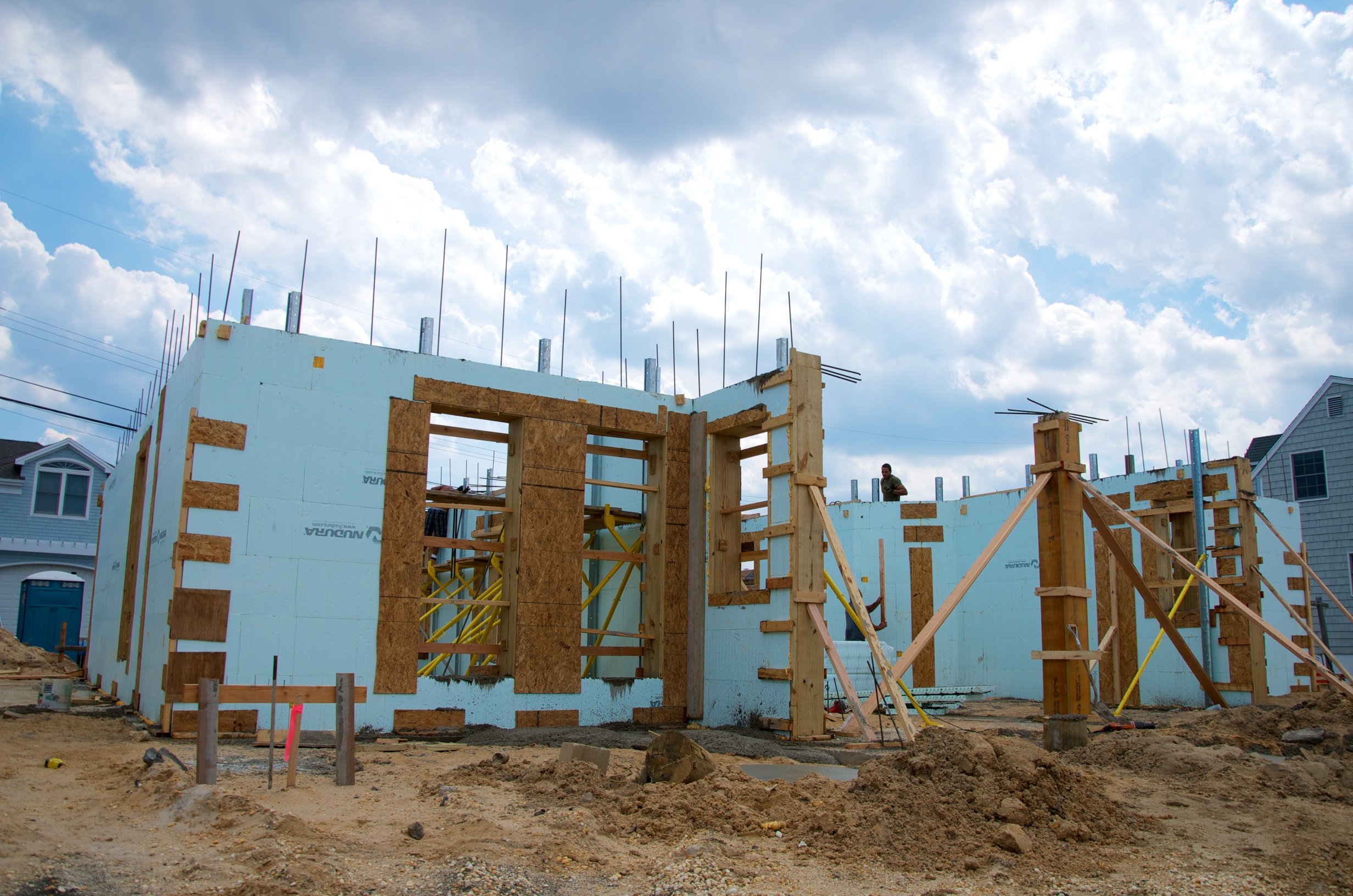
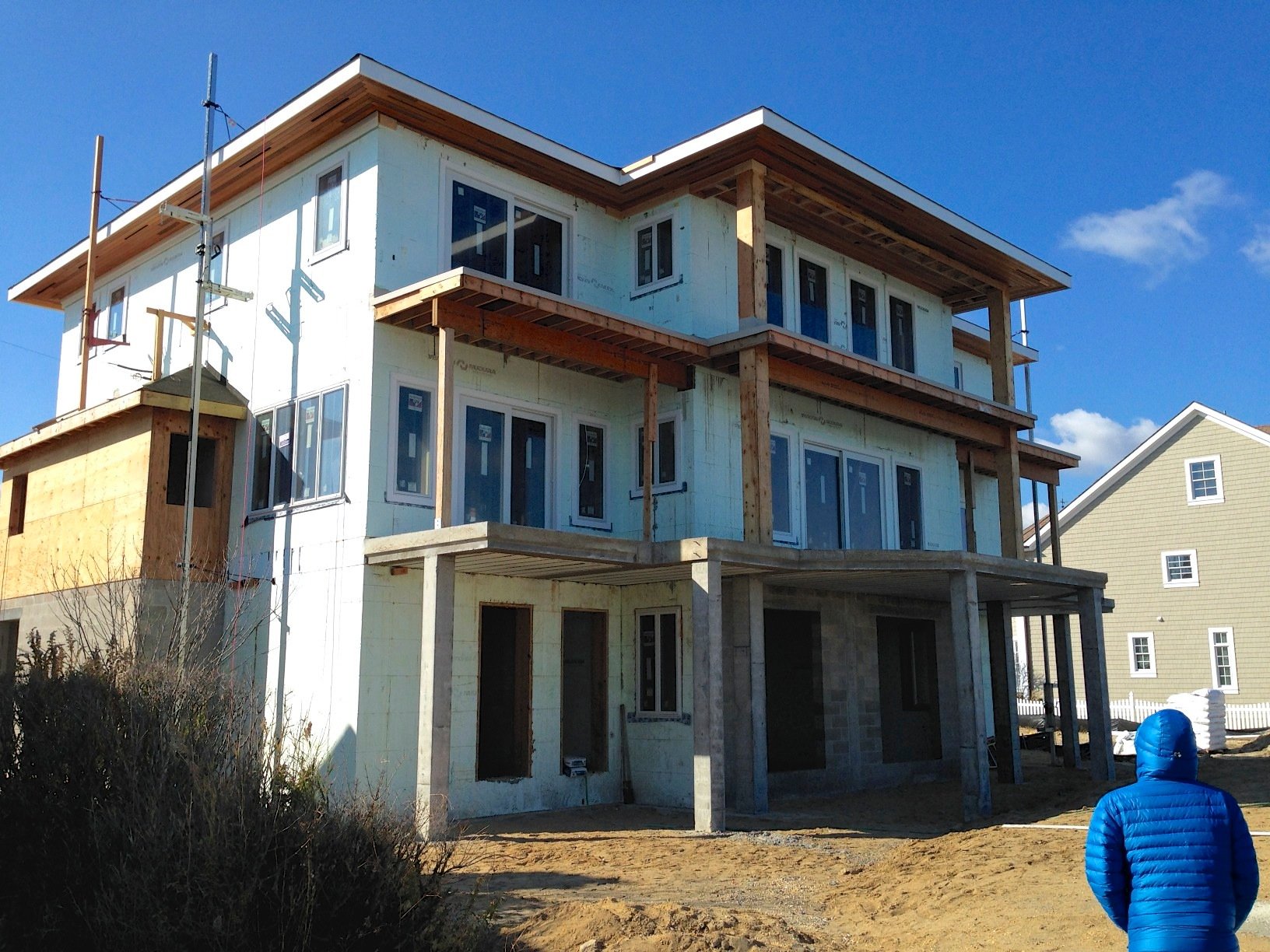
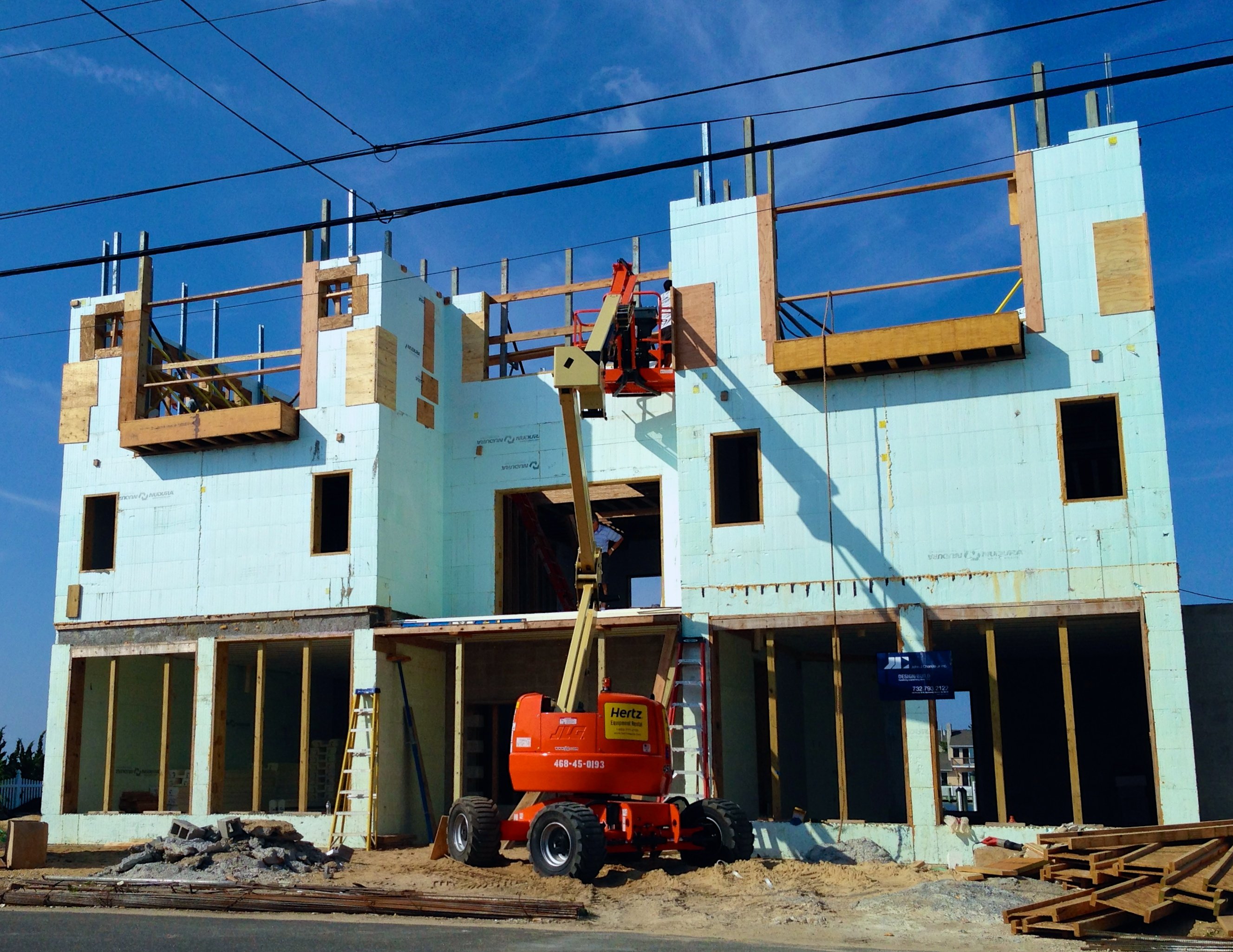
The previous home on this lot sat at a very low elevation. After Sandy, when the new FEMA flood maps came out (before they were partially walked back), this property was rebuilt to comply with strict V-zone requirements — first floor at +14 feet. The owner wanted certainty: a structure that would weather whatever the next storm threw at it. So we built the entire house using insulated concrete form (ICF) construction. Every level. Every wall.
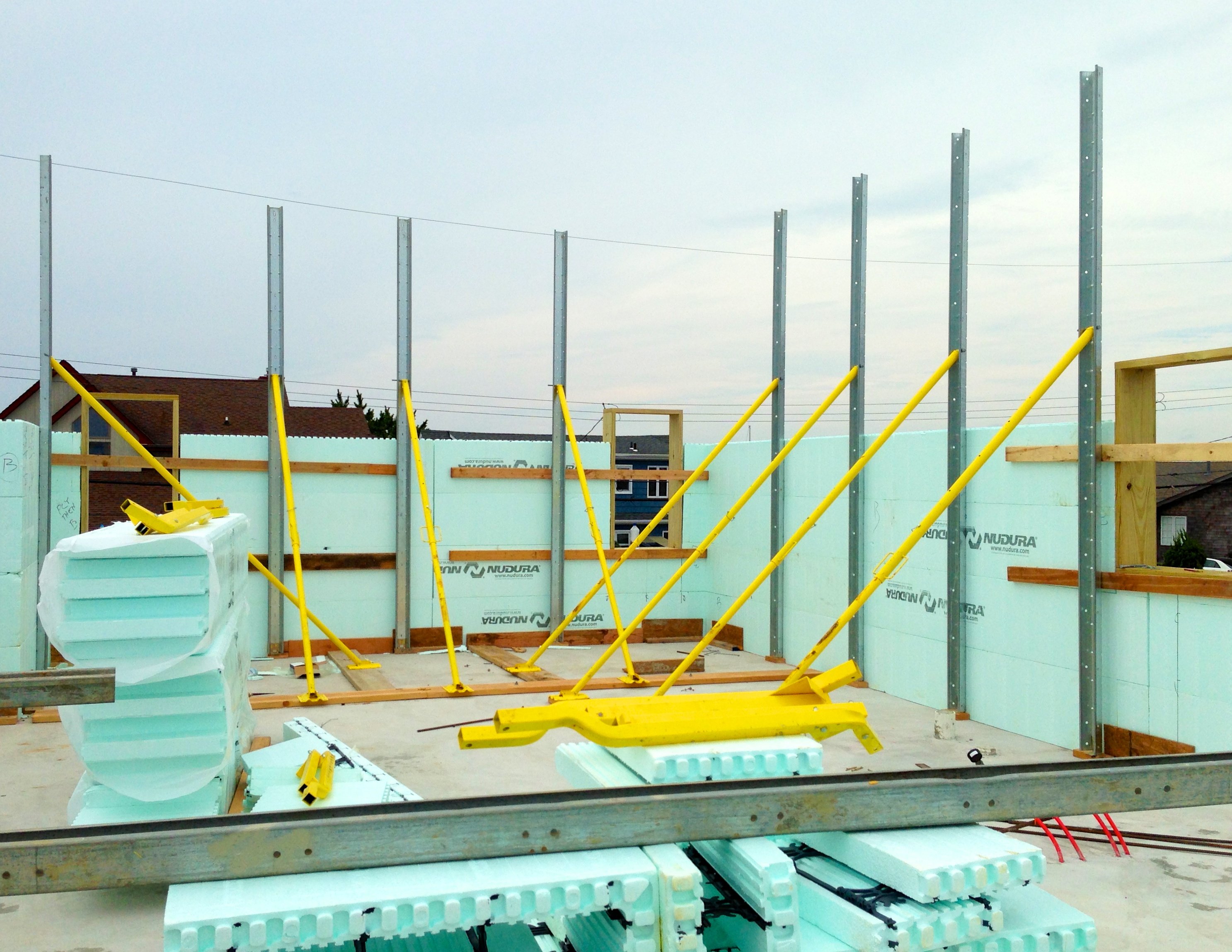
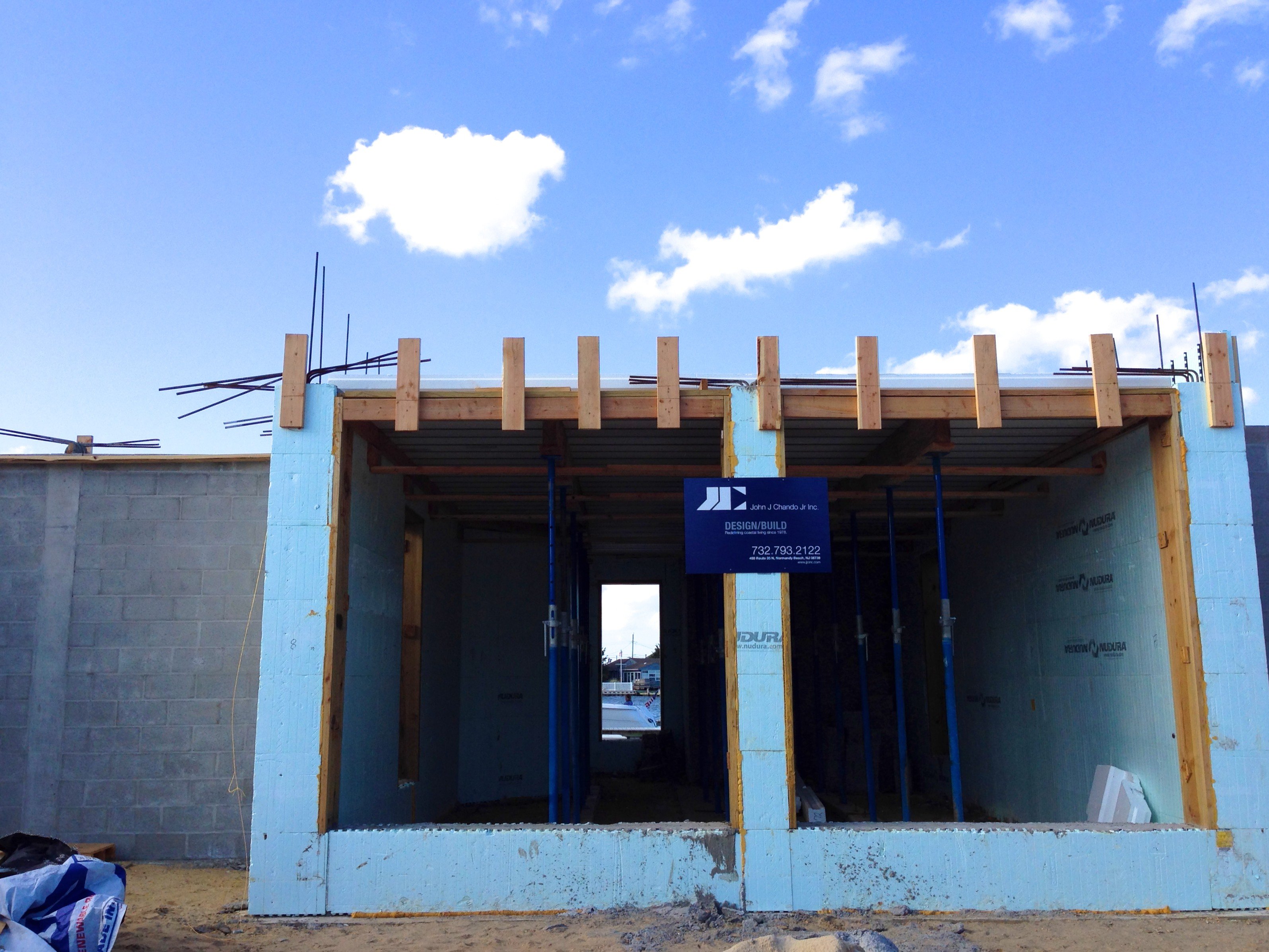
The technique repeats at every level: the foam ICF blocks are stacked, reinforcing steel is set inside, the concrete is poured, and the foam stays in place as permanent insulation. No structural retrofit needed between stories. The home becomes a continuous reinforced-concrete shell.
ICF vs. conventional cast-in-place
The traditional way to build with concrete is cast-in-place — ready-mix concrete poured into removable metal or wood forms that are stripped off after the pour cures. It’s strong. It’s just not insulated. With ICF, the forms become the insulation; you get the structural concrete and up to R-50 wall performance from the same wall thickness.
That R-50 performance translates to energy savings of up to 70% compared to a traditional wood-framed home of the same square footage. The premium you pay upfront for the ICF assembly typically returns inside five to seven years through gas and electric savings alone.
Why this matters even more on a raised home
Here’s the part most homeowners don’t think about until later: when you raise a home to escape future flood risk, you also dramatically increase the wind loading the structure has to resist. A house that used to sit close to grade now sits 14 feet up, fully exposed to whatever the wind is doing. Summer squalls and winter nor’easters at the Jersey Shore routinely produce 50–75 mph wind events. Those loads multiply on a raised home.
ICF construction handles that without breaking a sweat. The reinforced concrete walls resist wind loads up to 250 mph — well above any storm any of us are likely to see. No building sway. No wall stress cracking. And inside, you barely hear the storm.
The non-obvious benefits
Beyond the headline numbers, ICF brings a long list of quieter advantages:
- Four-hour fire rating for the wall assembly (a typical wood-framed wall offers about 45 minutes)
- No mold growth — concrete doesn’t retain moisture the way wood framing does
- No off-gassing — no formaldehyde, no adhesives, none of the manufactured-wood VOCs
- Quiet interiors — the concrete mass dampens noise from outside and between rooms
- Impact resistance — wind-driven debris that would penetrate a wood wall stops at the concrete
If you’re rebuilding on the Jersey Shore — or building new on a coastal lot — ICF is worth a serious conversation. The upfront cost is real; so is the lifetime return. Tell us about your project and we’ll walk through the math for your specific site.