Sixty tons of house, balanced on stacks of spruce that crack before they break. A walk-through of how we raise homes above the new FEMA flood elevation on the Jersey Shore.
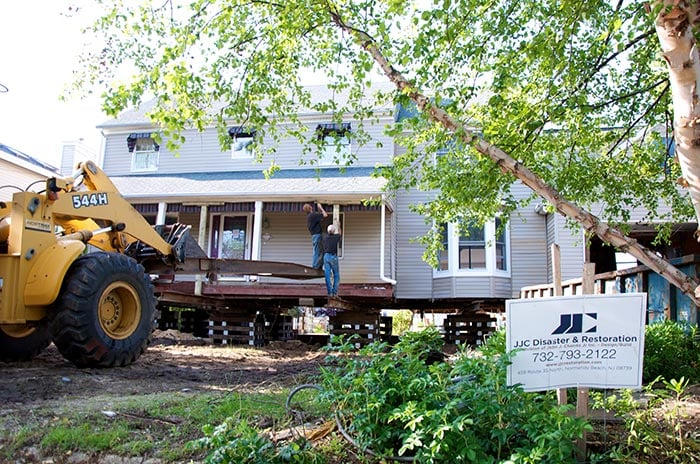
Raising a house can be tricky business — especially when the existing crawl space is shallow, as it was on this project in Point Pleasant. The first step was excavating in front of the house to make room for the steel I-beams that would slide under the first-floor joists.
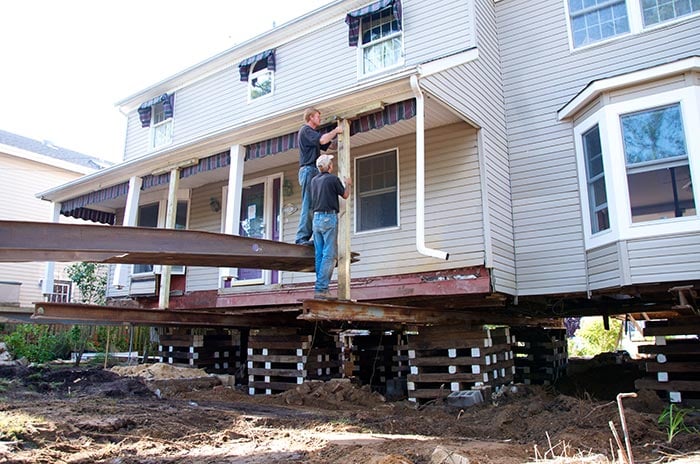
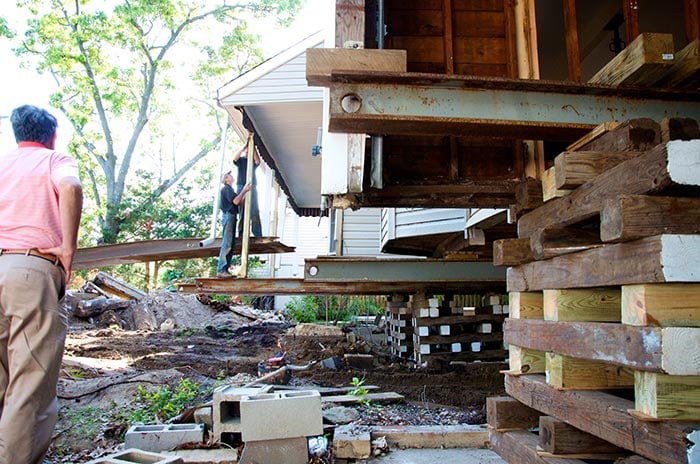
The crew brought their equipment in, set sixty feet of long steel beams under the structure, and slowly built up the wood cribbing.
Wood cribbing — and why it talks before it fails
Cribbing is exactly what it sounds like: blocks of wood, usually 4×4 or 6×6, cut 18–24 inches long and stacked log-cabin style to support the beams. We use soft woods — spruce and pine — for a specific safety reason: they crack slowly and audibly long before they fail completely. Stiffer, denser woods can fail explosively, with no warning. When you’re holding up a house, you want the wood to talk to you first.
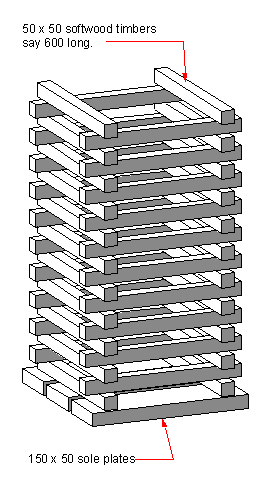
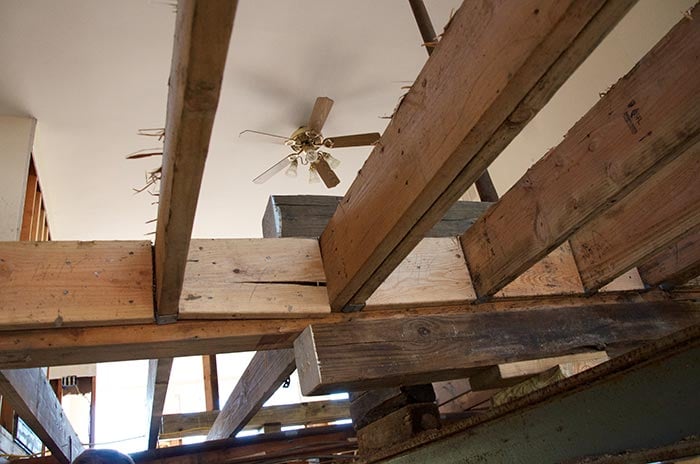
The steel I-beams sit on top of the cribbing, distributing the load. These beams will carry the entire house until we’ve rebuilt the new foundation at the new flood elevation. In this case, the home weighed 60 tons — measured directly by the hydraulic jacking system as it took the load.
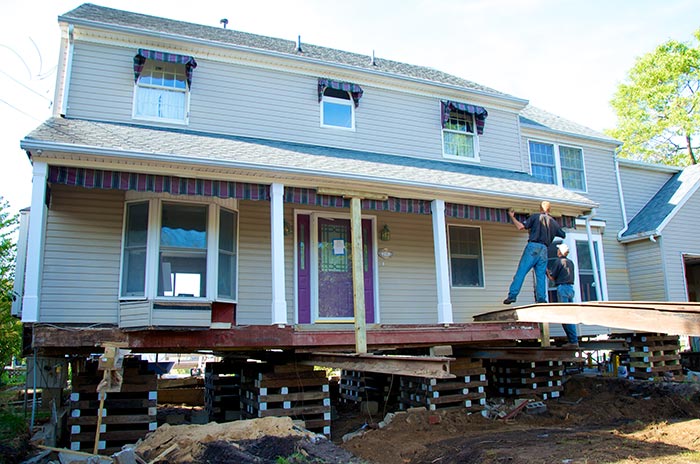
Building back to V-zone code
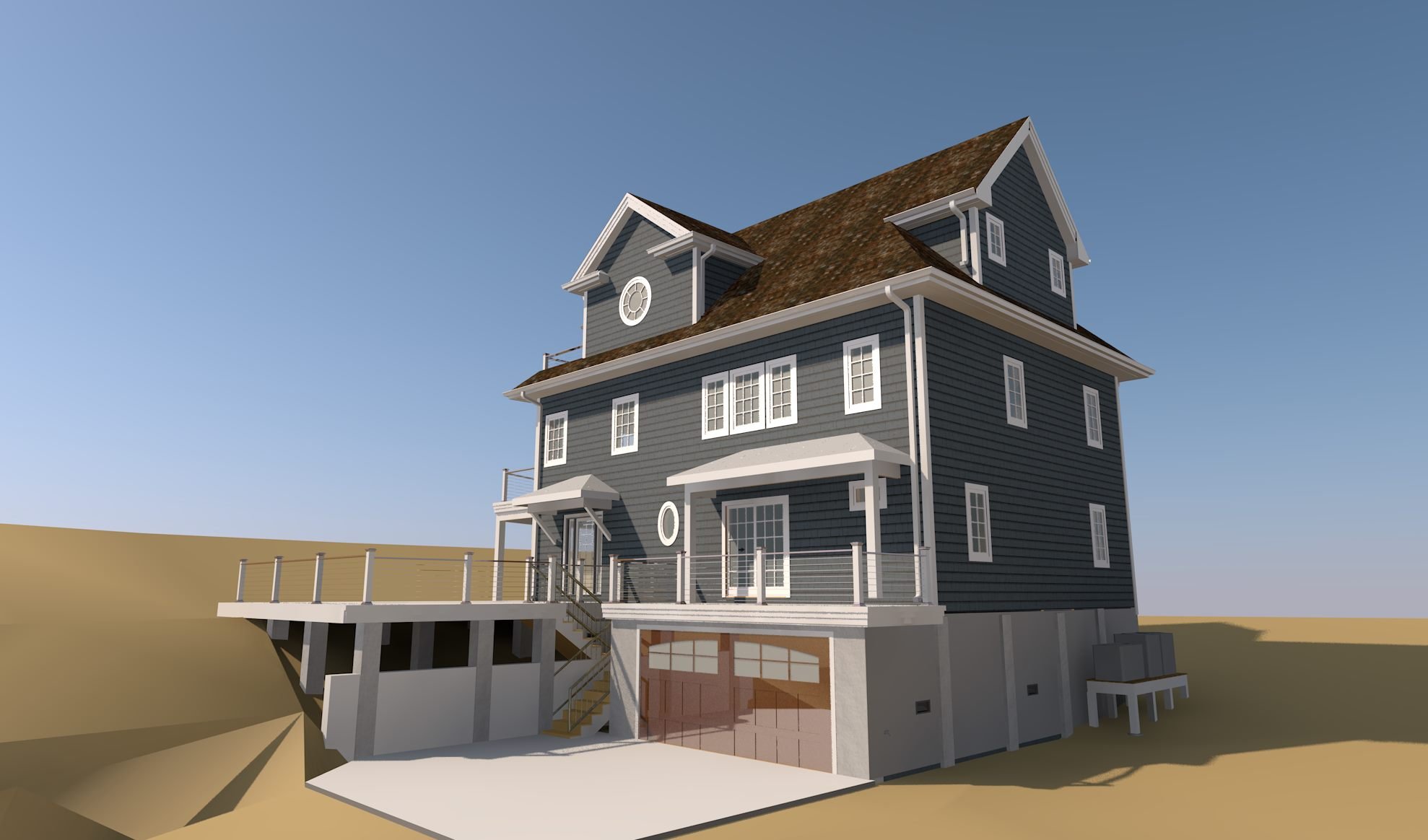
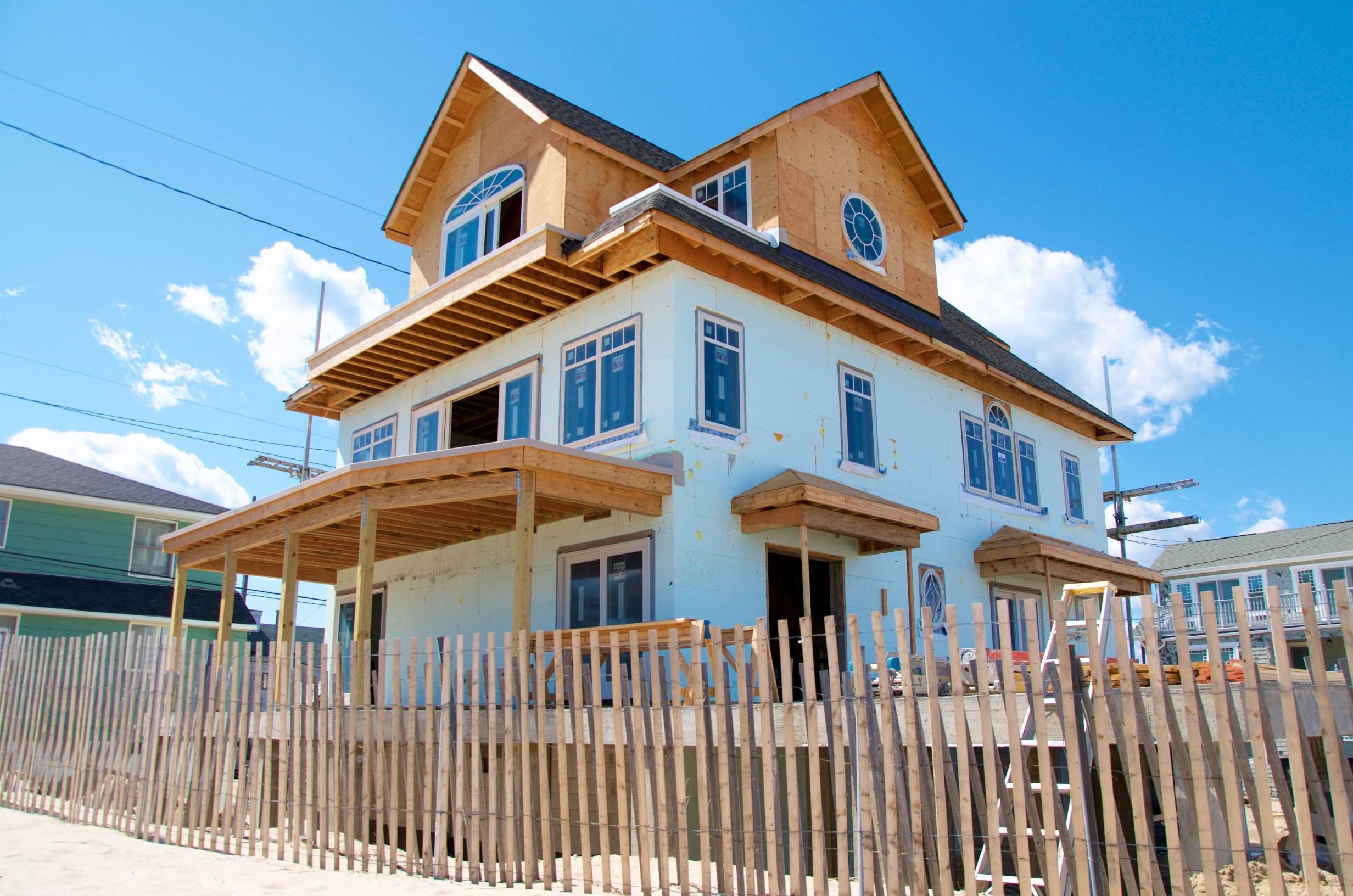
With the house up and stable, the next step is removing the old foundation and preparing the new V-zone-compliant foundation above the Advisory Base Flood Elevation of 10 feet, plus the two-foot freeboard most municipalities now require. The new foundation goes in as poured concrete in wood forms with concrete-block courses on top, all the way up to the new elevation.
We work on house lifting projects up and down the Jersey Shore — Point Pleasant, Mantoloking, Bay Head, Lavallette, Ortley Beach, Normandy Beach, and the surrounding coastal towns. Every job is different — soil, foundation age, height of the lift, breakaway-wall requirements — but the core process is the same: stable cribbing, balanced beams, slow hydraulic lifts, and a new foundation that will outlive the next storm.
Related project
Normandy Beach House Lift
Toms River, NJ
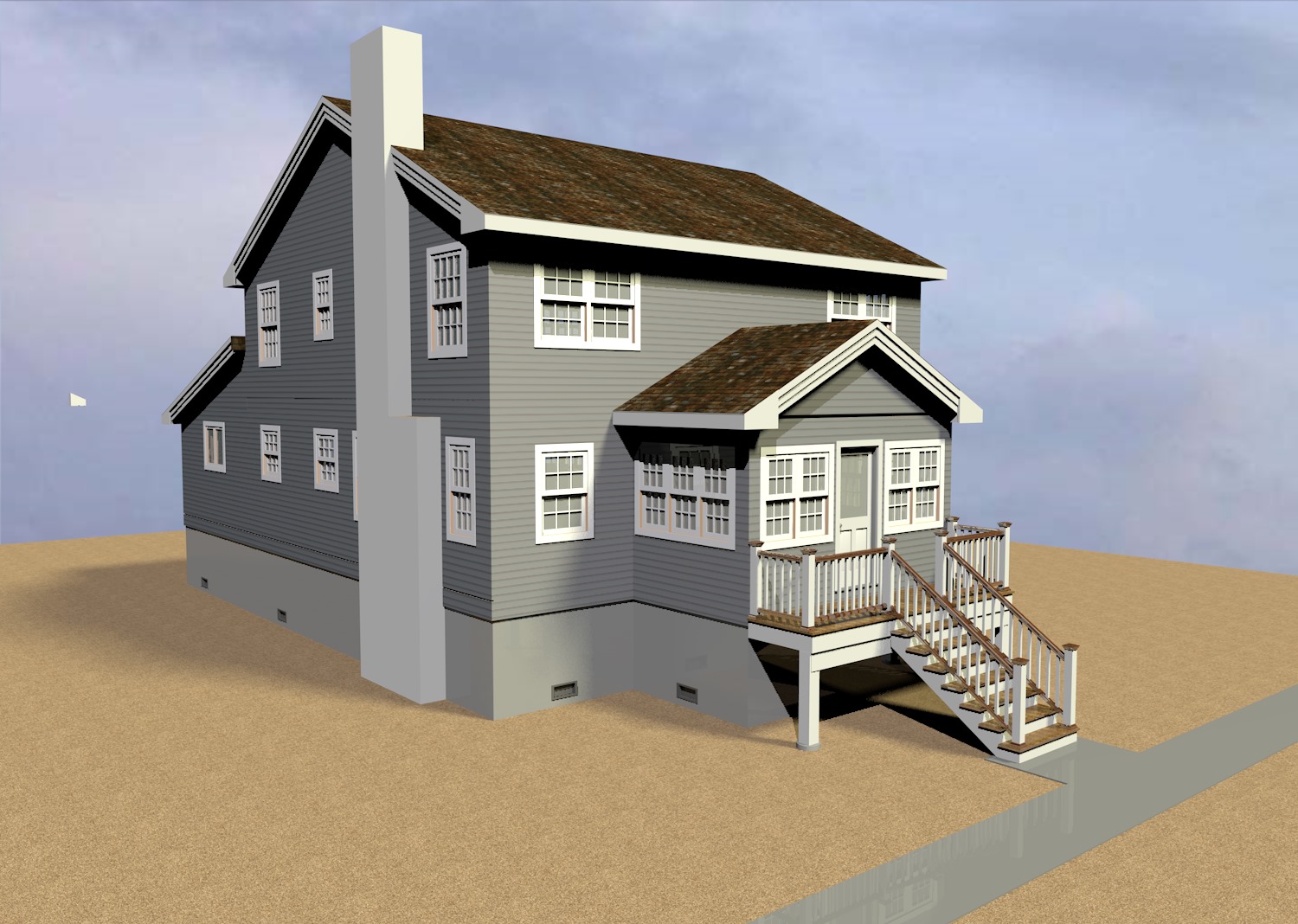
Normandy Beach house lift and elevation project in Toms River, NJ. Existing residence raised above flood elevation requirements with full design-build delivery by JJC Inc.
See the project →